
The Center For Restorative Breast Surgery Offers Access To More Women
Women across the Greater Dallas area now have expanded access to the world’s foremost specialists in advanced microsurgical breast reconstruction.
The microvascular reconstructive surgeons at the Center for Restorative Breast Surgery are internationally recognized experts in rebuilding breasts lost to cancer, preventative mastectomy, developmental conditions, and complications from previous surgeries. Our surgeons, Dr. Scott Sullivan, Dr. Christopher Trahan, and Dr. Whitten Wise provide care in both New Orleans and Dallas, working alongside Dr. Mary Jo Wright, Dr. Langevin, and Dr. Zielinski, who lead our Dallas office.
When a breast cancer diagnosis is made, women now have options to recreate the breast using natural tissue.
As pioneers of the most advanced reconstructive techniques today, our surgeons are the only team in the Dallas area offering this level of innovative, transformative breast reconstruction for women with cancer.
They have performed thousands of surgeries on women seeking to restore natural beauty and function, utilizing advanced surgical methods for breast cancer care, including Nipple-Sparing Mastectomy, as well as reconstructive techniques such as the DIEP, APEX, SGAP, TDAP, Body-Lift, and Stacked Flap procedures.
Our experienced team is with you every step of the way, helping you find the best care plan tailored just for you.
Schedule your complimentary breast reconstruction education call with us to learn more about your personalized options.

Learn More about our Dallas Office
Our clinic offers convenient access to our surgeons for women seeking the most advanced surgical treatments in breast reconstruction.
Dallas Office Address
5575 Frisco Square Blvd, Suite 110
Frisco, TX 75034
469-846-8370
MAP
CONTACT US

Meet Dr. Mary Jo Wright
READ TRANSCRIPT
I am Mary Jo Wright. I’m a breast cancer surgeon and a plastic reconstructive surgeon.
I’ve been performing breast surgery for over 30 years, certainly that my practice of breast surgery has changed and evolved with, as breast cancer and research.
And all we know about breast cancer has changed. My practice has definitely evolved along with it. Breast surgery, I do everything from ultrasound guided biopsies to lumpectomies mastectomies, either nipple sparing or non nipple sparing.
I also perform the lymph node surgery that goes along with that central lymph node biopsies and axillary lymph node dissections when necessary. And I can also put in porta-cs, which are the catheters that we use to administer chemotherapy for those patients that need chemotherapy.
I do implant-based reconstruction, or I also help under the microscope with the microvascular or using a patient’s own tissue to reconstruct their breasts.
I think that I can take the patient from beginning to end, from diagnosis to completion is what’s most rewarding to me to help that patient along and to be able to educate that patient about what their options are and to help them make good choices for themselves.
I used to be in academic medicine for a long time, so I’m used to teaching and educating medical students, residents, nurses, nursing students.
So now in my private practice, what I do is I bring that education piece to the patient because ultimately it’s, it’s their life and their choice.
And I think a well-informed patient is a much happier patient.
And throughout, you know, in 2024, patients have all kinds of choices depending on the, their cancer diagnosis.
It ranges from a reconstructive either reconstruction through implant reconstruction or using the patient’s own tissue.
And within that realm of using the patient’s own tissue, there’s multiple different options depending on the patient’s body type or previous surgeries or areas of concern for them.
In it, there’s nipple sparing mastectomies now, and depending on the location of the tumor and the size of the breast cancer, that allows us to keep the nipple alar complex for those patients who desire that.
And it’s a tried and true choice that it’s not necessarily a risk of recurrence in, in some patients. So the appropriate patient with the appropriate choice is all part of that education.
Well, we certainly have evolved through, definitely from the early nineties until 2024, where, you know, was women back in the early nineties never knew going into an operation whether or not they were gonna end up with a mastectomy or not, or lumpectomy or whether they’re gonna end up with a nipple or without a nipple.
And I think that, clearly we have made advances in women’s health and, we are listening to our patients in 2024 and beyond, hopefully, that there are choices for women.
So there’s been that evolution and certainly nipple sparing mastectomy, within the last 10, 15 years has been huge, uh, choices for women. But it has to be the appropriate choice, right?
So if you have a tumor that’s behind the nipple, AAL or complex sparing the nipple AAL or complex is really not a great choice oncologically or from a cancer standpoint, because most women that I know of never want
to see this disease again, right? They never want to have to go through this again.
And we try to help them through that to eliminate those possibilities. Can we do it a hundred percent? No, but we can act, we can reduce that risk.
So for those patients who have smaller tumors that are farther away from the nipple alar complex, and then they, that is an option for them to keep that nipple.
And we’ve changed our incision types too, right? So, we used to do a horizontal incision, now we go in the fold of the breast for nipple sparing operations. And not all patients, you know, it depends on how much ptosis or sagging a patient has, but for the appropriate patient, we can talk to them about where the incisions would be placed.
And what is the likelihood of being able to perform, nipple sparing mastectomy versus non nipple sparing mastectomy. I think there’s multiple, benefits. Number one would probably be the emotional, psychological benefit of after going to sleep to be able to wake up and still have breast mounds or something that looks similar to how you looked before you went to the operating room.
Most patients, you know, this is a life changing can be psychologically difficult because we’re taking away one of the pieces that make us different from other human beings, IE men. And, you know, you’re taking away a woman’s femininity by removing her breasts. And I think that that plays a lot in helping us help that patient to recover and to be able to go onto the next stages of the treatment in breast cancer for the patient to be able to wake up and feel somewhat whole.
Obviously we cannot restore them to the way that they were originally made, but we can try to do our best. Oh, I think the majority of patients are overwhelmingly pleased with the outcome in these surgeries. If you use your own tissue to reconstruct your breasts, let’s face it, you know, you’ll end up with a tummy tuck who doesn’t want that? And that’s an added benefit. Or if you, we use your buttock tissue, then you get a lifted buttocks and any woman over 50 knows the benefits of that. And if we use the tissue from your bra line, then guess what? That little bra line fat will go away too.
But, I think that really looking at the big picture of the patient identifies with their cancer from the get from that minute that they get diagnosed and their whole life changes. And whether you have children or you have four-legged children, or you have, you know, partners or whatever goes on in your life that the benefit of having breast reconstruction after mastectomy is that throughout we just have to look at the long range goal.
It is to put you back into your life as whole as we possibly can or as nearly whole as we possibly can. And I think that psychologically it just turns on that switch that allows you to eventually go back into that role of your life. And who doesn’t want that?
So patients who have, have delayed surgery, typically you, we can use the same techniques of using their own tissue. We can’t use implant reconstruction typically because the skin is what’s missing. And so we need to build something that with the skin on, on it as well. Those patients that have, I think some of the patients refer to it as the football, which is the skin paddle from a delayed reconstruction. What we find is we put those incisions, we can put those in aesthetically pleasing or cosmetically pleasing areas. So it is less egregious to those patients who have had to have their mastectomy without the nipple, without a lot of skin, who’ve been radiated.
Those patients are sometimes more grateful because they’re now, they have soft tissue that’s been replaced by something that’s been thin and hard for such a long time.
So women who’ve had implant reconstruction after mastectomy, depending again on their body type, who are just, it’s not quite right for them. They made a choice and now they wish to change their mind. I think that that’s a perfect example of how using your own tissue can actually make that your breasts feel more natural. They’re softer than an implant. It’s living healthy tissue that when you go outside and it’s below freezing, that the implant doesn’t have a blood supply to it, so it won’t warm up. Sometimes it’s very cold on the chest wall. And so if you replace that with your own tissue, then it has a good blood supply to it and it warms up just like the rest of your body does.
Those patients are – the option is still there for them. And we certainly do many patients that have had implant reconstruction that now wish to have auto their own tissue to be, to use as their reconstructive option that is, and they, you know, still make a very natural breast.
And obviously, you know, as we get older, gravity is not our friend. And you’ll still have that nice gentle slope to your breast.
“I long ago discovered a passion for helping women restore self-image, regain confidence, and feel whole again. My goal is to provide women with the compassionate and quality care they deserve.”
– Mary Jo Wright, M.D., FACS
Meet Dr. Eric Zielinski
READ TRANSCRIPT
Eric R. Zielinski, MD (00:00):
There’s a few things that inspire me to come into the sub-specialty and the fact that it combines both kind of a mechanical structural architecture of what you’re doing with an artistic eye for having a final result. And then breast reconstruction really is the combination of those two things because you’re doing a practical thing where you’re reconstructing something that’s been taken away from somebody, but obviously there’s a big emphasis on the cosmetic results as well. One thing I’ve noticed since coming to the Center for Restorative Breast Surgery is that there’s no shortcuts. There’s nothing that’s cookie cutter. Everybody comes in and gets a tailored experience for whatever they need for their breast cancer journey. So the fact that our center does the most natural tie breast reconstruction I think is emblematic of two different things. The first is that this is really something that we’ve committed to.
(00:51):
We’re chosen to bend our careers getting very good at advancing techniques and making patients have great results. And then the second part of that is that the patients themselves are happy that they have great results and had such a good experience that they want to tell other people about the center. I think one of the most important things is that they feel like they’re being heard and that they’re being cared for. A lot of a breast cancer journey is going to be treatment of the breast cancer, which is obviously a very necessary part for the oncologist and the breast surgeon to take care of that portion. But really their reconstruction is about them because it’s really their preferences and their decisions that are going to be the most important thing to get the outcome that they want. A lot of the women that come in have been to our website or know about our group because they’re very well-informed.
(01:43):
So a lot of it is a joint decision making process. They come in with their ideas. I kind of work through what may or may not be a good option for them and we can come to a joint decision that way. Some other women, they have no idea. They’re overwhelmed by the process of this diagnosis and all the treatment options. And then what I can do is just provide different steps, different options. The breast reconstruction is very personalized and every woman’s going to have different goals depending on what their situation is and how they’re feeling. So great surgical care is going to entail the entire process from walking into the office, feeling comfortable in the office like the staff is there for you because that is what we’re here for. We’re here to provide a service to the patients and starting with that through feeling like you’re making a good informed decision after our initial consultation, that you have all the information, that you don’t feel pressured to go a certain way and that we’re in this together along the process.
(02:43):
And then of course with the postoperative care, there’s always somebody available. If you call, you can get ahold of one of the physicians or physician assistants to answer any of your questions. And then long-term seeing you happy with your results, hearing about how things are going and your post-cancer journey and just having that long-term relationship. So at the Center for Restorative Breast Surgery, it really is a collaborative effort. I talk to my partners every single day about different cases and we work together in the operating room to make sure things are going along safely and efficiently in order to get the breast results.
“By combining compassionate care with the most advanced options available, I strive to restore not only form, but confidence and a sense of wholeness.”
– Eric Zielinski, M.D.
Our Dallas office
We provide a space designed with intention, for every step of your journey.
At the Center for Restorative Breast Surgery, we believe healing extends beyond surgery. From the moment you walk through our doors, every detail is thoughtfully curated to create a calm, supportive environment—one that feels personal, peaceful, and centered entirely around you.
For women navigating breast cancer and considering reconstruction, we are here to provide not only advanced care, but a space where you can feel at ease, informed, and truly cared for. Because here, every detail is designed to heal.
Watch Our Patient Stories
Sharon
Mary
Debra & Alyssia
Emily
Additional Services Offered
Cosmetic Solutions
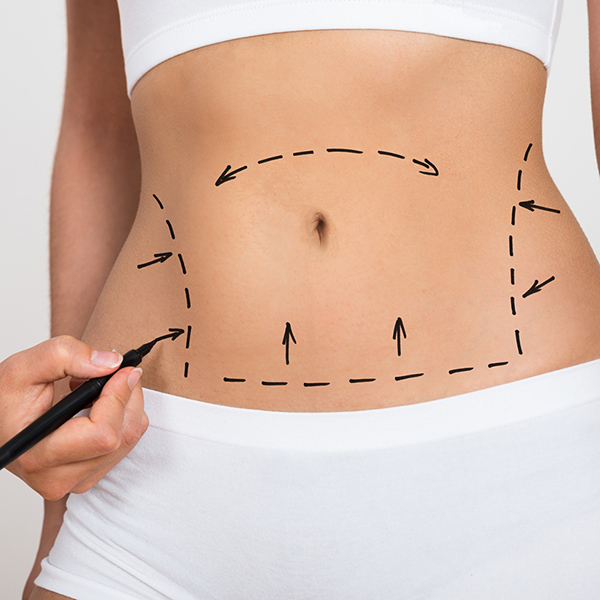
In addition to advanced surgical breast reconstruction, Dr. Wright also offers cosmetic surgery solutions for an enhanced or improved aesthetic outcome.
- Breast Augmentation
- Breast Reduction
- Breast Lift
- Body Lift
- Liposuction
- Tummy Tucks
- Mommy Makeover
- Eyelid/Blepharoplasty
- BOTOX
- Fillers
More About Our Cosmetic Solutions
Breast Augmentation is a cosmetic surgery that increases the size and shape of the breasts with either implants or fat transfer.
Breast Reduction is a cosmetic surgery that reduces the size and shape of the breasts by removing fat, tissue, and skin. For women with large breasts, breast reduction can ease discomfort and improve self-image.
Breast Lift is a surgical procedure that raises the breast by removing excess skin and reshaping the tissue. It can be done with or without breast augmentation or reduction.
Body Lift is often performed on patients who have had significant weight loss and are left with sagging skin. The procedure improves the shape and tone of the underlying skin by removing excess fat, tissue, and sagging skin before lifting the remaining skin.
Liposuction removes fat from specific parts of the body through suction. The most common areas for liposuction include the stomach, hips, thighs, buttocks, arms, and neck. During the procedure, contouring can be done to improve the overall look.
Tummy Tuck, or abdominoplasty, is a cosmetic procedure that removes excess fat and skin from the abdominal area to improve appearance.
Mommy Makeover is a popular plastic surgery used to improve women’s physical appearance after pregnancy and breastfeeding. The Mommy Makeover has no set components, as it is custom-tailored to the patient’s individual needs and desires. The common starting point, however, is breast and abdomen contouring, with additional elements added as needed.
Eyelid/Blepharoplasty is a surgical procedure to remove excess skin from the upper eyelids and to reduce bagginess from the lower eyelids.
BOTOX® is used to reduce wrinkles and treat various medical conditions. The injectable procedure is performed in the office, and there is no downtime following the visit. The effects of BOTOX can last 3 – 12 months.
Dermal Fillers are injected under the skin to restore volume, smooth fine lines, soften creases, and enhance facial contours. This non-surgical option is done in the office with no downtime.